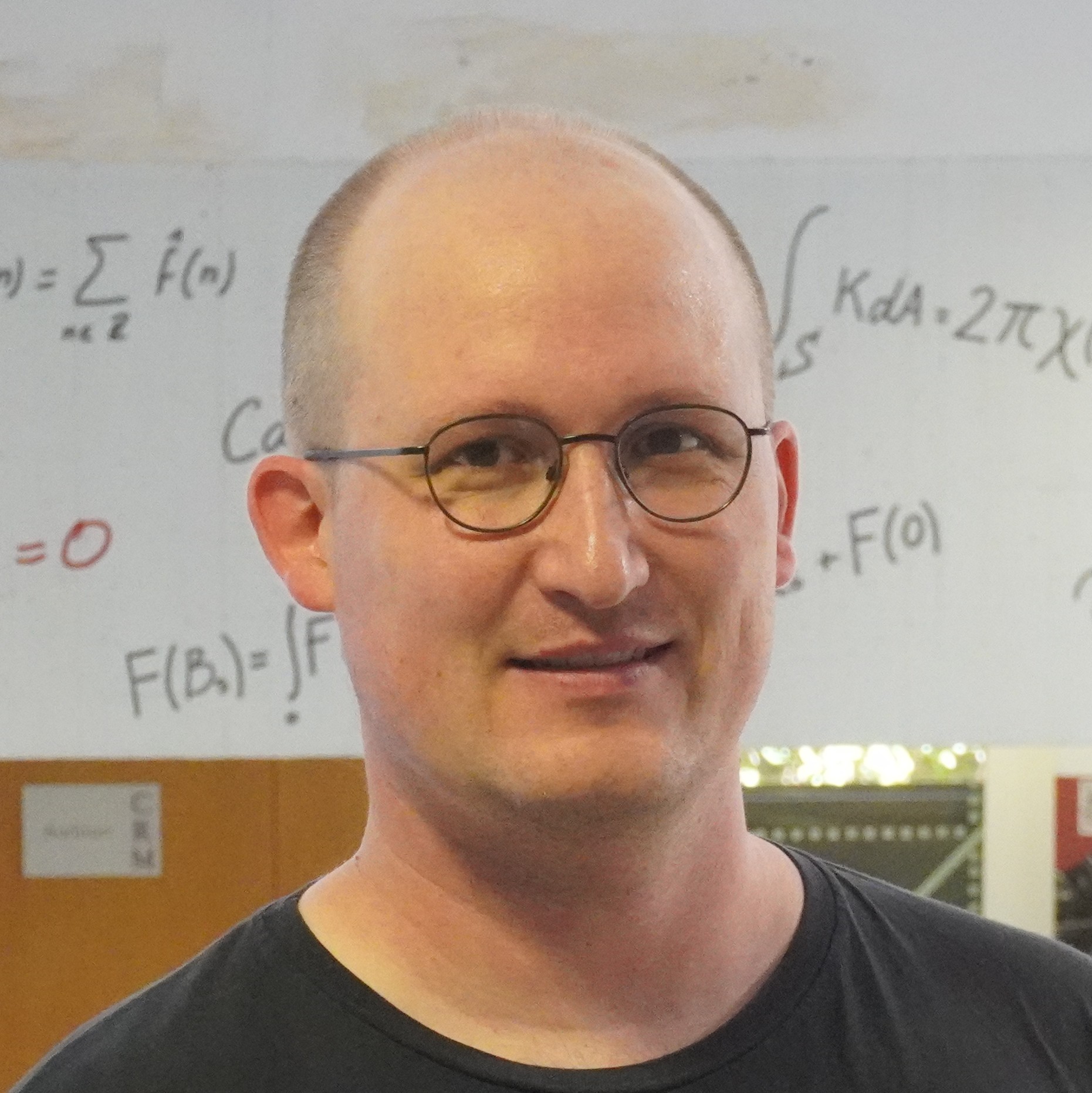
About me
I am a postdoctoral researcher at the Centre de Recerca Matemàtica in Barcelona, investigating how neural circuits maintain stable function despite ongoing change. I completed my PhD in Physics at Goethe University Frankfurt, specializing in theoretical and computational neuroscience, where I spent my time analyzing neural data and building models to understand population-level dynamics in the brain.
Representational Drift
Neural representations continuously change at the level of individual neurons. Even in stable environments where behavior remains unchanged, neurons alter their response properties from day to day — a phenomenon termed representational drift. Yet despite this instability at the level of neurons, our perceptions and memories remain remarkably stable, sometimes over years.
This opens fundamental questions, challenging our basic understanding of what neural representations are and how they support cognition: How can behavior remain stable when its neural substrate is constantly changing? How does the brain extract stable meaning from a drifting neural code?
Dynamical Representations
Rather than defining neural representations as specific activity patterns, they are better understood as geometric structures, manifolds embedded in high-dimensional neural activity. In this view, individual neurons can drift freely, but the geometry that encodes meaning, i.e. the similarity between stimuli, remains stable.
This reframing reconciles a fundamental tension: representations must be flexible enough to learn and adapt, yet stable enough to support lasting memories and consistent behavior. The key might be degeneracy, the idea that many different neural configurations can implement the same computation. Drift moves the brain through this degenerate space, preserving what matters (relational structure) while allowing flexibility at the level of individual neurons.
Current Research
My work spans three complementary levels. Theoretically, I use dynamical systems analysis to characterize how drift geometry emerges and what constrains it within network models. Computationally, deep neural networks serve as fully observable model systems to test predictions about how learning shapes representational stability. Empirically, I analyze neural recordings before, during, and after learning, comparing them to stable environments to test how geometric representations persist or transform under different conditions.
This work addresses broader questions: How do learning and memory actually operate if neural activity is constantly changing? What principles govern when representations remain invariant and when they deform? And how might understanding these dynamics illuminate both adaptive behavior and dysfunction?